
Keratherm®
Adhesives & Coatings
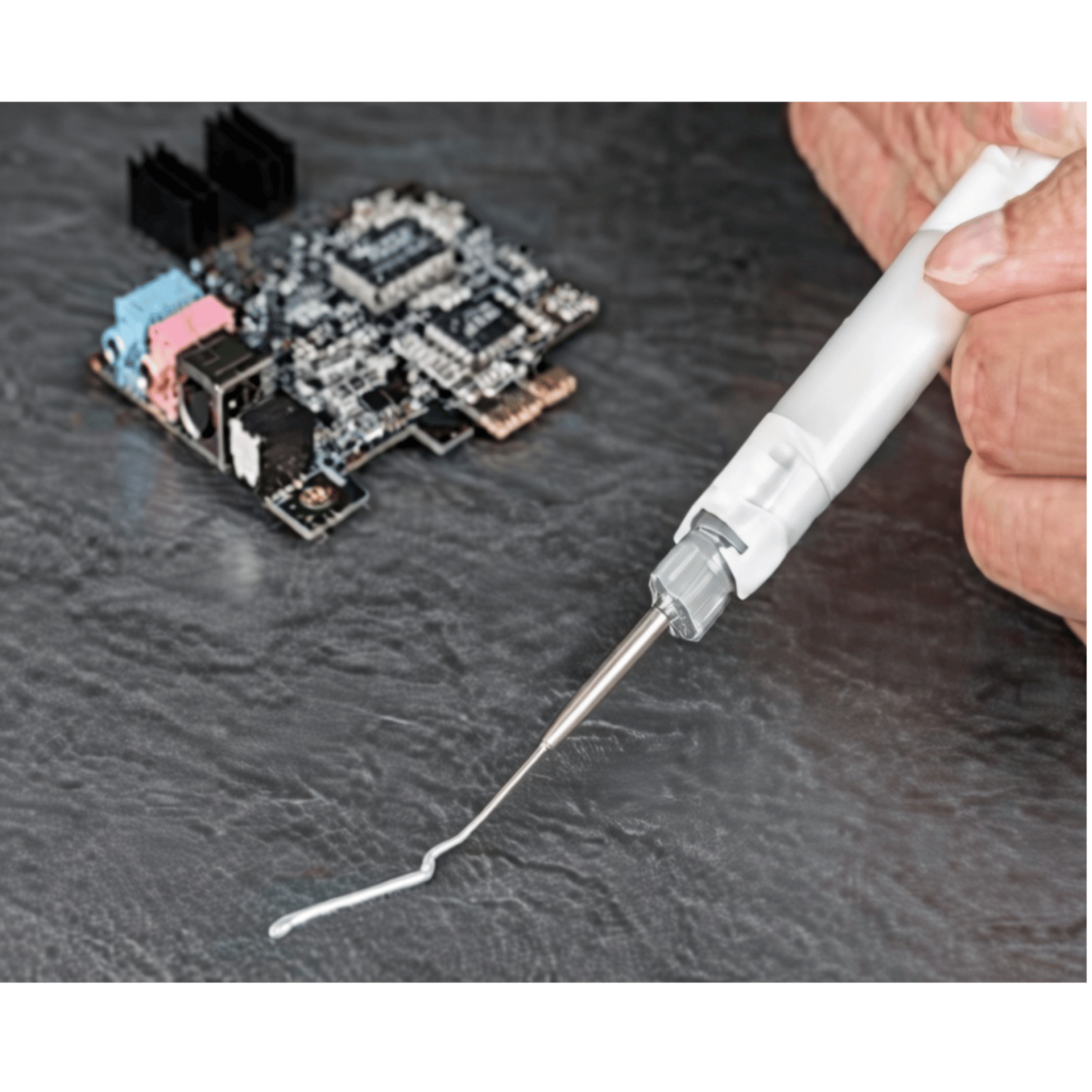

Versatile Application Methods
High Thermal and Heat Resistance
Optimized Storage and Stability
Product Tables
| Product | Thermal Conductivity (W/mK) | Thermal Resistance (K/W) | Dielectric Breakdown (kV/mm) | Tensile Strength (N/mm²) | Hardness (Shore A) | Temp. Range (°C) | Mixing Ratio | Datasheet |
|---|---|---|---|---|---|---|---|---|
| Bond 100 RT | 1.5 | 0.83 | 12.0 | 15.0 | 20 - 35 | -40 to +180 | 1:1 |
| Product | Film Type | Color | Coating Thickness (µm) | Peel Resistance (N) | Bonding Strength (N) | Application Temp. (°C) | Reflow Process | Shelf Life (Months) |
|---|---|---|---|---|---|---|---|---|
| SIL-S1 | PSA silicone | Transparent | 20 - 50 | 2 - 10 | > 0.15 | -60 to +250 | Yes | 8 |
| SIL-S2 | Gel silicone | Transparent | 30 - 75 | 1 - 5 | > 0.2 | -60 to +250 | Yes | 8 |
| ACRYL-A1 | Acrylate | Transparent | 15 - 25 | 5 - 12 | > 0.3 | -40 to +180 | No | 12 |
| ACRYL-A2 | Acrylate removable | Transparent | 20 - 50 | 2 - 5 | > 0.2 | -40 to +180 | No | 12 |
| ACRYL-A3 | filled Acrylate | Milky | 40 - 60 | 2 - 5 | > 0.2 | -40 to +180 | Yes | 12 |
Frequently Asked Questions
What is the main difference between the Bond series and the SIL/ACRYL films?
The Bond series (like Bond 100 RT) consists of two-part liquid adhesives that require mixing and a specific cure time to create a permanent thermal bond. They are ideal for filling irregular gaps. The SIL and ACRYL films are pre-applied “dry” adhesive systems. These are better for high-speed assembly and applications where a consistent thickness is critical across the entire surface.
Does Keratherm Bond 100 RT require heat to cure?
No, the Bond 100 RT is designed to cure at Room Temperature (hence the “RT”). While it reaches a functional cure in approximately 20 minutes at $25$°C, you can accelerate the process by applying heat if your production timeline requires a faster turnaround.
Which adhesive should I choose for a high-temperature environment?
Can the ACRYL-A1 or A2 films be used in a reflow soldering process?
No. The ACRYL-A1 and ACRYL-A2 films are not suitable for the high-heat cycles of reflow soldering. If your assembly process requires reflow, you should use SIL-S1, SIL-S2, or the ACRYL-A3 (filled Acrylate) variant, all of which are designed to maintain integrity during those thermal peaks.
How should I store these products to ensure they reach their full shelf life?
As thermal demands rise with miniaturization, MH&W’s Thermal Division provides the expertise and Keratherm® materials necessary to prevent system failure. Contact our engineers for technical support, request an RFQ, or purchase standard sheets directly from our online shop.