
Keratherm® Thermal Grease
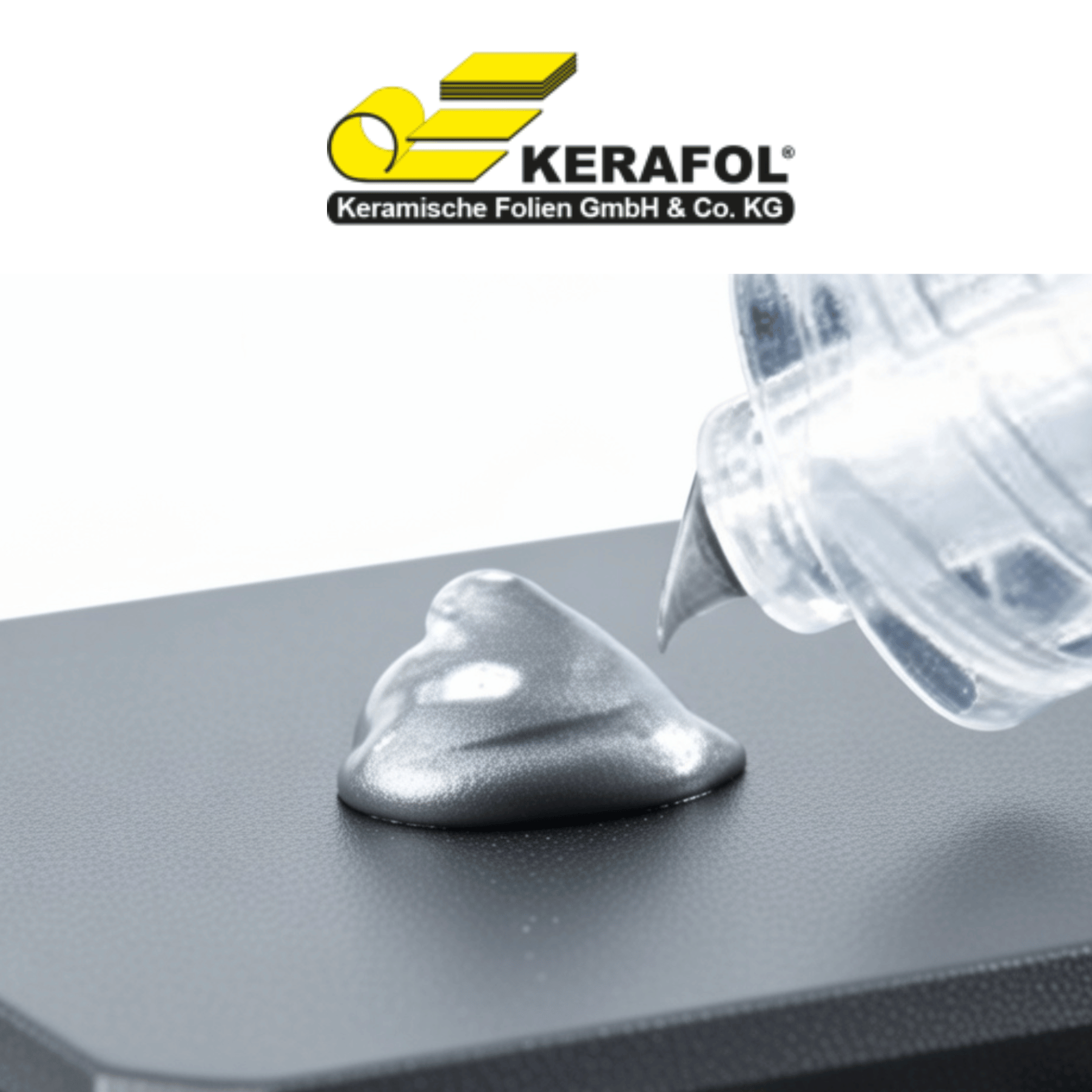
Keratherm® Thermal Greases are high-performance, ceramic-filled compounds designed to provide superior heat dissipation for demanding electronics like desktop CPUs and IGBT units. The KP 99 variant features a thixotropic formula that ensures excellent surface adaptation and fluidity, while the KP 12 and KP 14 models offer synthetic, silicone-free alternatives for sensitive applications. These single-component silicons are engineered for reliability and can be easily applied via syringes, cartridges, or bulk cans depending on the project scale. To ensure peak performance, the material remains stable for up to 12 months under normal climatic conditions.

High Thermal Conductivity
These ceramic-filled single-component silicones are engineered with high thermal conductivity to ensure efficient heat transfer. The specialized fillers maximize heat dissipation, helping to lower the operating temperatures of high-power electronic components.
Excellent Surface Adaptation
The thixotropic nature of the KP 99 grease allows for very good fluidity and low viscosity characteristics. This ensures the grease adapts perfectly to surface irregularities, providing superior thermal contact between the component and the heat sink.
Silicone-Free Options
For environments sensitive to silicone, KP 12 and KP 14 variants consist of synthetic thermal polymers. These provide a reliable alternative that prevents silicone migration or contamination in specialized industrial applications.
Versatile Packaging & Handling
Available in a variety of sizes, from 3 ml syringes for precision work to 1 kg cans for high-volume production, these greases are designed for easy application. They can be processed and applied quickly to notebooks, desktop CPUs, and IGBT units.
Proven Material Stability
Broad Application Suitability
These greases are a flexible solution for a wide range of hardware, including notebooks and industrial IGBT units. Whether used in consumer electronics or heavy-duty power modules, they provide consistent heat dissipation across various sectors.
When should i use Thermal Grease?
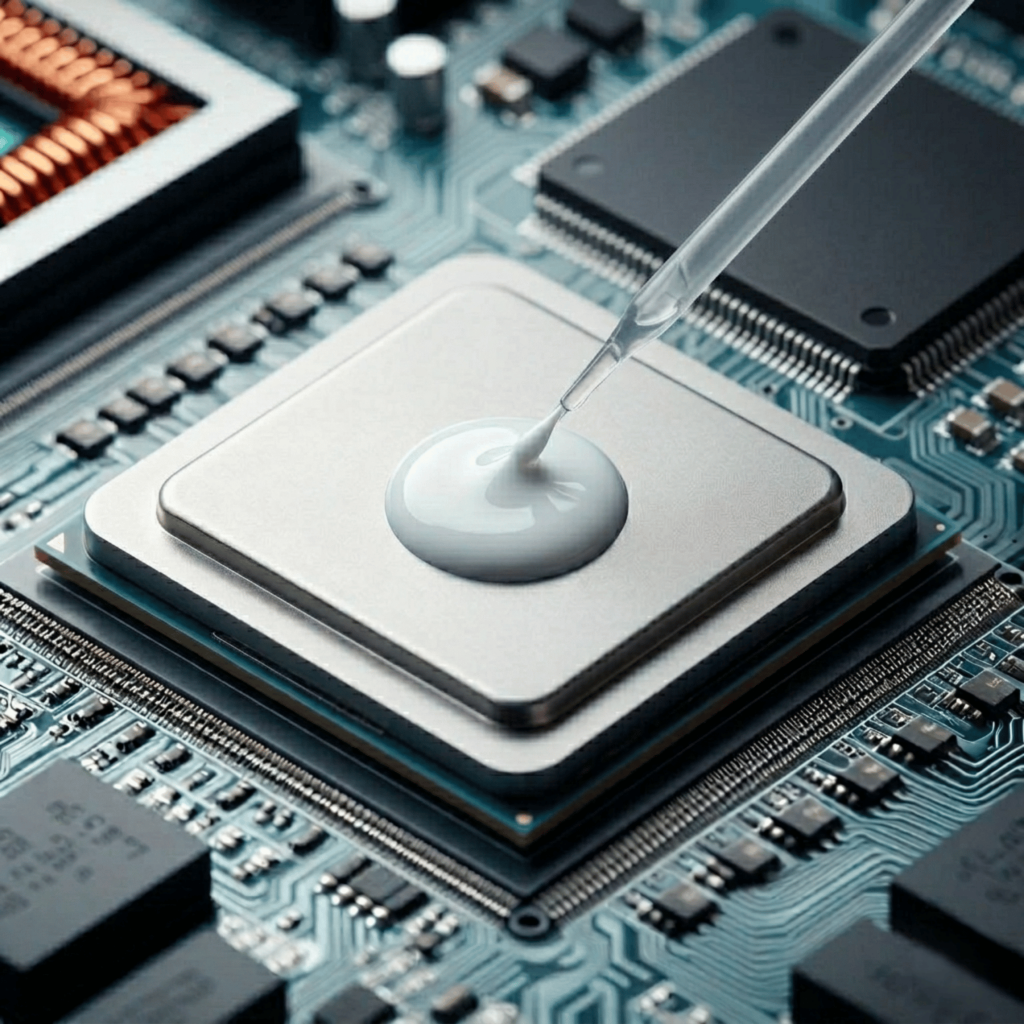
Maximum Surface Filling: Thermal grease is the preferred choice when you need to bridge microscopic gaps between a heat source and a cooling unit. Because it is a homogeneous, thixotropic fluid, it flows into the finest surface irregularities that solid films might miss, ensuring a seamless thermal bridge.
High Heat Hardware Applications: Grease is specifically designed for high-performance components that generate significant heat, such as Notebooks, Desktop CPUs, and IGBT Units. Its high thermal conductivity is engineered to maintain safe operating temperatures for these power-dense devices.
Customizable Bond Lines: Unlike pre-cut films with fixed dimensions, thermal grease allows you to control the exact amount of material applied to the interface. Using precision tools like 3 ml or 5 ml syringes, you can create an ultra-thin bond line that minimizes the distance heat must travel.
Manufacturing Efficiency: Films are “clean” and die-cuttable. They can be shaped to exact component dimensions and applied quickly like a sticker, which simplifies mass assembly and makes rework much cleaner than scraping off grease.
Who is Kerafol®?
Thermal Grease Comparison Chart
| Grease | Measured Thickness (mm) | Thermal Conductivity (W/mK) | Thermal Resistance (K/W) | Electrical Conductivity (pS/m) | Viscosity (Pas) | Application Temp. (°C) | Density (g/cm3) | Total Mass Loss (Ma.-%) | Datasheet | View Product |
|---|---|---|---|---|---|---|---|---|---|---|
| KP 97 | 0.025 | 5.0 | 0.0120 | 0 | 70 - 110 | -60 to +200 | 2.1 | < 1.3 | VIEW | |
| KP 98 | 0.025 | 6.0 | 0.0100 | 0 | 110 - 150 | -60 to +200 | 2.2 | < 1.5 | VIEW | |
| KP 99 | 0.025 | 9.2 | 0.0068 | 0 | 90 - 140 | -60 to +200 | 1.9 | < 0.8 | VIEW | |
| KP 100 | 0.025 | 5.0 | 30 - 0 | -60 to +200 | 1.4 | VIEW | ||||
| KP 12 Silicone Free | 0.025 | 10.0 | 0.0060 | 53 | 30 - 60 | -60 to +150 | 1.4 | < 0.1 | VIEW | |
| KP 14 Silicone Free | 0.025 | 10.0 | 0.0060 | 0 | 150 - 180 | -60 to +150 | 2.2 | < 0.25 | VIEW |
Frequently Asked Questions
Does MH&W offer a silicone-free version of Keratherm® grease?
Yes. For applications sensitive to silicone outgassing—such as optical components, relays, or painting processes—we offer the KP 12 and KP 14 series. These are based on synthetic thermal polymers rather than silicone. KP 12 provides a high thermal conductivity of 10.0 W/mK, ensuring you don’t have to sacrifice performance when moving to a silicone-free chemistry.
How should Keratherm® Thermal Grease be stored, and what is its shelf life?
Technical Tip: Because these are highly filled compounds, some separation of the filler materials may occur over time. If you notice any oil separation, simply mix the grease thoroughly before application to restore its homogeneous consistency.
Will the grease dry out or "pump out" over time during operation?
What is the recommended application thickness for optimal performance?
To achieve the lowest thermal resistance, the grease should be applied as thin as possible while still filling all surface irregularities. Keratherm greases are designed for a very low bond line thickness, typically between 0.025 mm and 0.06 mm.
Applying too much grease can actually increase thermal resistance; the goal is to replace the air in the microscopic “valleys” of the metal surfaces, not to create a thick barrier between them.
Can Keratherm® Thermal Grease be applied using automated dispensing equipment?
As thermal demands rise with miniaturization, MH&W’s Thermal Division provides the expertise and Keratherm® materials necessary to prevent system failure. Contact our engineers for technical support, request an RFQ, or purchase standard sheets directly from our online shop.